PRP and Stem Cell Therapy: Miracle Healers or Medical Hype?

After a car crash, slip, or fall, many people feel pain that does not go away fast. Injuries to joints, muscles, or tendons can make simple tasks hard.
Sometimes, even rest or basic care is not enough. This is when treatments like platelet-rich plasma (PRP) therapy and stem cell therapy may help.
At Surgery Consultants of Florida, we care for patients with trauma-related injuries every day. With over 30 years of experience, our team understands how these injuries affect your life.
We use regenerative treatments to support natural healing and reduce pain. PRP therapy and stem cell therapy can offer a gentle, non-surgical option for people who want to recover safely and improve movement.
Our goal is simple. We help you heal well, feel supported, and move forward with confidence.
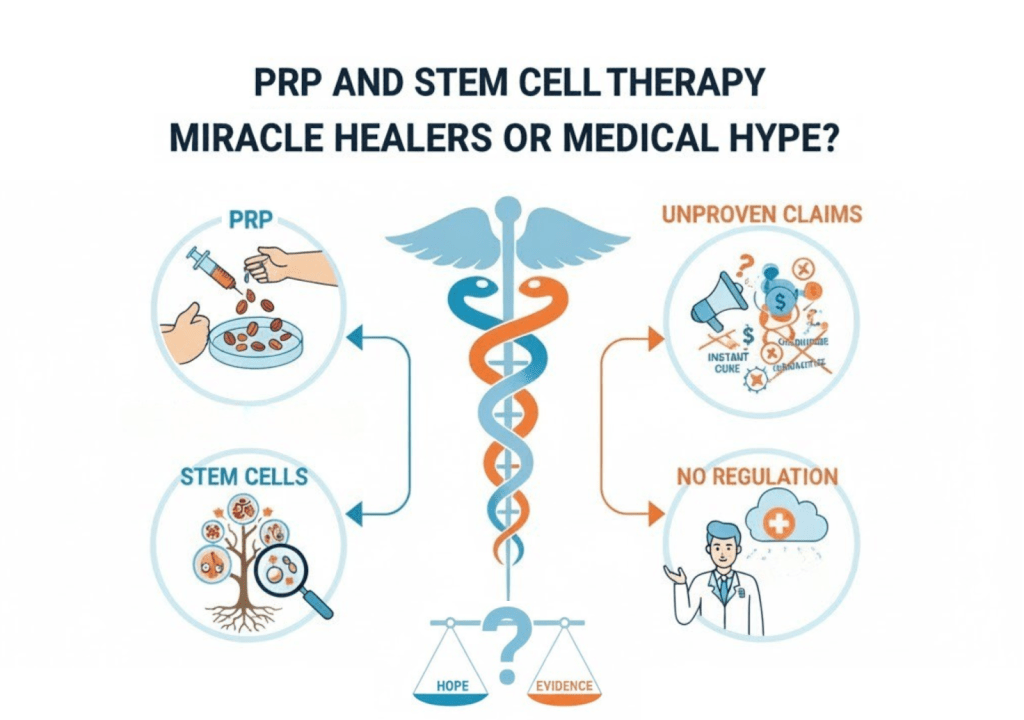
What Is PRP and Stem Cell Therapy?
PRP therapy and stem cell therapy use your body’s own cells to help you heal. These treatments are part of regenerative medicine, which helps the body fix injuries in a natural way.
First, during PRP therapy, a doctor takes a small amount of your blood. The blood is then spun to make PRP. The doctor injects this plasma into the injured area. The plasma has growth factors that help the tissue heal faster.
Next, stem cell therapy uses special cells from your body. These cells can become bone, tendon, or cartilage. They help build new, healthy tissue. They can also improve movement in painful joints.
Also, both treatments may help people with joint pain, muscle injuries, or sports injuries. They may reduce swelling and pain. They may also help you move with more ease. Many patients choose these treatments when pain makes daily life hard.
Studies show that PRP therapy can help repair tissue and lower inflammation. Meanwhile, research shows that stem cell therapy may help joints move better and heal over time.
Together, PRP therapy and stem cell therapy give patients safe, nonsurgical ways to feel better. They work with your body to support healing and strength.
What Are the Differences Between PRP and Stem Cell Therapy?
The main difference between PRP therapy and stem cell therapy is how they help your body heal. PRP therapy uses platelets from your blood. These platelets release growth factors that help repair injured tissue.
On the other hand, stem cell therapy uses special cells that can become bone, cartilage, or tendon. These cells help build new, healthy tissue.
Also, both treatments support natural healing and may reduce pain over time. They give patients gentle, nonsurgical options for relief.
Here is a simple look at PRP therapy vs stem cell therapy to help you understand how they differ:
| Feature | PRP Therapy | Stem Cell Therapy |
| Source | Patient’s blood | Bone marrow or fat tissue |
| Main Function | Stimulates repair using growth factors | Regenerates tissue using stem cells |
| Procedure Time | 30–60 minutes | 1–3 hours |
| Recovery Period | Short (a few days) | Moderate (a few weeks) |
| Best For | Mild to moderate injuries | Severe or chronic damage |
| Cost | Lower | Higher |
| Regenerative Potential | Limited to repair | Strong tissue regeneration ability |
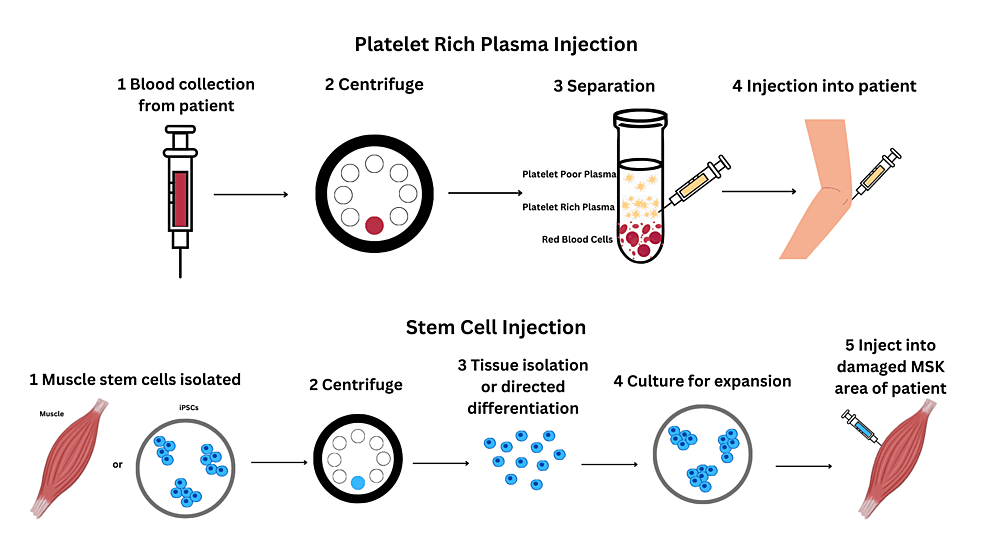
How PRP and Stem Cell Therapy Work: Benefits and Overview
PRP therapy and stem cell therapy help the body heal in a natural way. First, in PRP therapy, doctors take platelets from your blood.
These platelets have growth factors that help fix damaged tissue. They also help calm swelling. Next, stem cell therapy uses special cells from your body.
These cells can grow into new tissue. They can help repair joints, muscles, and other problems. Together, these treatments can help people with musculoskeletal injuries move and feel better.
Here are the simple benefits of PRP therapy and stem cell therapy.
1. Promotes Tissue Regeneration
Both treatments help the body make new tissue. PRP therapy sends growth factors to the injured spot. These factors help the tissue heal faster. Stem cell therapy creates new cells that can become cartilage, tendons, or ligaments. This helps the body stay strong during healing.
2. Reduces Swelling Naturally
These treatments help lower swelling. They also help reduce pain. Because of this, many people feel better without taking medicine for a long time. The body heals in a gentle and natural way.
3. Boosts Collagen Production
PRP therapy and stem cell therapy help the body make more collagen. Collagen keeps tissues firm and flexible. As a result, joints can stay strong and stable. This also helps the body heal faster after musculoskeletal injuries.
4. Restores Joint Mobility
Stem cell therapy helps fix stiff or sore joints. It builds new, healthy tissue in damaged areas. Over time, many people move more easily and feel less pain.
5. Speeds Sports Injury Recovery
Many athletes use PRP therapy for sports injuries. It helps muscles and tendons heal faster. This means they can return to activity sooner and feel more confident.
Overall, both treatments are great options for personal injuries. They offer safe, natural ways to ease pain, support healing, and improve movement.
What Is the PRP and Stem Cell Therapy Success Rate and Mechanism?
PRP therapy and stem cell therapy help the body heal in a natural way. PRP treatment uses platelets from your blood. These platelets release growth factors that help injured tissue heal.
Meanwhile, stem cell therapy uses special cells from your body. These cells can become new cartilage, tendons, or ligaments. They help fix damaged joints and soft tissue.
Also, new tools in tissue science give these cells a safe place to grow. This improves the treatment’s effectiveness for each patient.
Studies show good results for both treatments. PRP therapy has a 60%–80% success rate. It often reduces pain and improves joint movement. It also works well for tendon and soft-tissue injuries.
Meanwhile, research shows a strong stem cell therapy success rate. About 70%–90% of patients feel less pain and move better within 6–12 months.
Together, PRP therapy and stem cell therapy can give long-lasting relief. They may also help patients heal faster with less downtime and fewer side effects.
What Are the Risks and Side Effects of PRP and Stem Cell Therapy?
Both PRP therapy and stem cell therapy are safe and gentle treatments. They help the body heal in a natural way.
However, like any medical procedure, they still have some risks. Most side effects are mild. You may feel small pain, redness, bruising, or swelling at the injection site. Usually, these symptoms fade within a few days.
More serious problems can happen, but they are rare. They often occur when the treatment is not done correctly. This is why it is important to see trained professionals who know how to perform PRP therapy and stem cell therapy safely.
Here are some possible risks and side effects.
Infection
Infection can occur if tools or skin are not cleaned well. However, strict safety steps help prevent this problem.
Bleeding
Some patients may have light bleeding or bruising. This is more common in people with bleeding issues or those who take blood-thinning medicine.
Nerve Damage
Poor injection placement can harm a nerve. Therefore, skilled medical experts must guide the needle with care.
Overall, both PRP therapy and stem cell therapy remain low-risk options. They offer safe support for natural healing when done by qualified providers.
Begin Your Recovery Journey With Natural Healing at Surgery Consultants of Florida
Are you struggling with chronic pain, limited mobility, or a slow recovery from an injury? Whether it’s caused by arthritis, sports injuries, or degenerative conditions, pain can prevent you from living your life to the fullest. Additionally, the frustration of relying on medication or facing long recovery times can make healing feel out of reach.
At Surgery Consultants of Florida, we specialize in cutting-edge PRP and stem cell therapy, which empower your body’s natural healing abilities. Our experienced team provides nonsurgical, regenerative solutions that speed up recovery, reduce pain, and improve joint function. Furthermore, with personalized treatment plans, we’re committed to helping you restore mobility and achieve long-lasting relief. Call us at 833-557-7263 to book an appointment and get back to doing what you love.
FAQ
What is the typical PRP recovery time?
The initial downtime is short, usually just mild soreness or swelling that lasts from one to seven days. Complete recovery and visible benefits take more time, typically around four to six weeks to see initial improvements and three to six months for the full results, depending on the treatment area and condition severity.
What are the limitations of PRP?
The effectiveness of PRP can vary because different clinics may prepare it in various ways. As a result, this makes the results hard to predict. Additionally, while PRP helps the body heal by signaling other cells, it does not directly fix or replace damaged tissue. It’s also important to note that PRP may not work as well for severe injuries or advanced conditions.
What are the stem cell therapy controversies?
The main controversies involve unapproved, unregulated treatments that are not scientifically proven to be safe or effective. However, these treatments can be costly because insurance often does not cover them. There are also ethical concerns, particularly about using cells from sources like embryos.
How long do the results from PRP and stem cell therapy last?
The results of PRP and stem cell therapy can last anywhere from several months to years, depending on the injury or condition being treated. However, for chronic conditions like osteoarthritis, patients may require follow-up treatments to maintain long-term relief. In some cases, patients may need periodic booster injections to prolong the effects and ensure continued improvement.
Are PRP and stem cell therapies covered by insurance?
PRP and stem cell therapies are often not covered by insurance. These treatments are considered elective and are typically out-of-pocket expenses. However, some insurance companies may cover these therapies if they are deemed medically necessary for specific conditions. Therefore, it’s important to check with your insurance provider to understand your coverage options for regenerative therapies.